
Houses of worship have always been places of openness. People gather without barriers, expecting the environment to be safe.
Recent events have challenged that assumption.
The attempted attack on a Michigan synagogue has added to a broader pattern seen across the country. Incidents like this are not isolated. They show that churches, synagogues, and mosques can face similar risks, even when daily operations feel calm and routine.
As a result, conversations around worship security are changing.
Why Houses of Worship Remain Soft Targets
Most religious spaces are designed to be welcoming, which naturally limits the control exercised over entry and movement. Guests arrive at different times, services bring predictable gatherings, and people are free to move through the building without restriction.
This creates a level of exposure that is often underestimated.
In many cases, security depends on volunteers or staff members who aren’t trained in safety. While well-intentioned, this approach leaves gaps in awareness and coordination.
Another issue is authority. When something feels off, it is not always clear who is responsible for making decisions or taking action. That hesitation can slow down response.
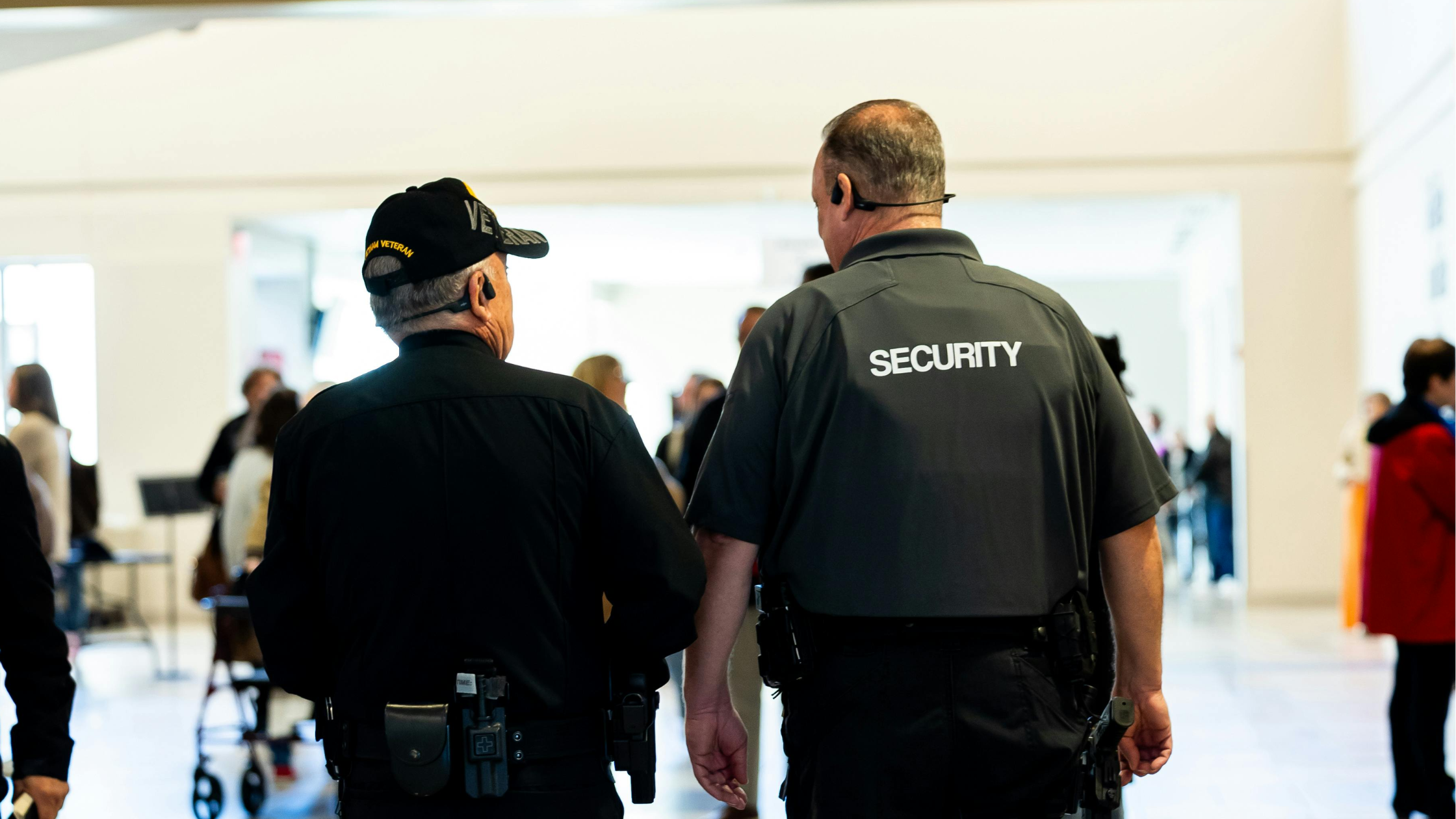
Houses of worship require strong security protection, just like any other public gathering space. This means having a dedicated director of security and trained security guards who can take responsibility for safety, handle situations as they arise, and allow leadership to focus on their role. When this structure is in place, people feel more confident in the safety of themselves and their congregation.
Common Gaps in Security for Worship
In most houses of worship, safety is not treated as a defined function. It exists as a shared responsibility, handled alongside other duties during services and events. As a result, key security components are left without ownership.
This is where gaps begin to form.
Common gaps include:
No control at entry points
People come and go freely, but no one is assigned to observe or manage access.
No clear person in charge
When something feels off, there is no defined authority responsible for making decisions.
Security is handled as a secondary task
Staff and volunteers are focused on operations, not on monitoring or response.
No plan for higher attendance
Larger services and events bring more movement, but security coverage often stays the same.
No preparation for escalation
If a situation develops, there is no structured response to follow.
These gaps are not about intent. They come from the absence of a defined system.
The Growing Role of Armed Security Guards in Houses of Worship
Houses of worship have traditionally avoided armed security. For many, the presence of weapons feels out of place in an environment built on trust, openness, and peace. The idea of visible protection can seem at odds with the space’s purpose.
At the same time, recent situations have led more organizations to reconsider this position. The focus is shifting toward the responsibility to protect people during services and gatherings, especially when risks are no longer theoretical.
Armed security guards in houses of worship are brought in to handle situations that require immediate and controlled response. This includes managing serious disturbances, responding to individuals who pose a threat, and maintaining order if a situation escalates beyond what staff or volunteers can handle.
There are also concerns about how this presence will affect the atmosphere. In practice, trained personnel are positioned to remain calm, observant, and unobtrusive. Their role is not to stand out, but to be prepared. When done right, security can be present without changing how the space feels to those who attend.
At SHIELD, we understand the sensitivity of this approach. Our directors of safety and security take this into account when developing security plans for houses of worship, ensuring that protection is in place while the environment remains calm, respectful, and appropriate for the space.
This allows houses of worship to maintain their character while still providing a higher level of protection for everyone inside.
Worship Security in Michigan: A Structured Approach
Houses of worship in Michigan face the same responsibility as any public gathering space. Security needs to be planned, assigned, and consistently managed.
Here we can help.
SHIELD is a Michigan-based security company that places trained security directors on-site to help houses of worship build clear, reliable safety systems. Our directors of safety and security assess how each space operates, identify where responsibility must be clearly assigned, and build a structure that supports both safety and the space’s daily use.
This approach is applied across churches, synagogues, and mosques with the same level of care and professionalism.
If you’re looking for trusted security services, let’s talk.