
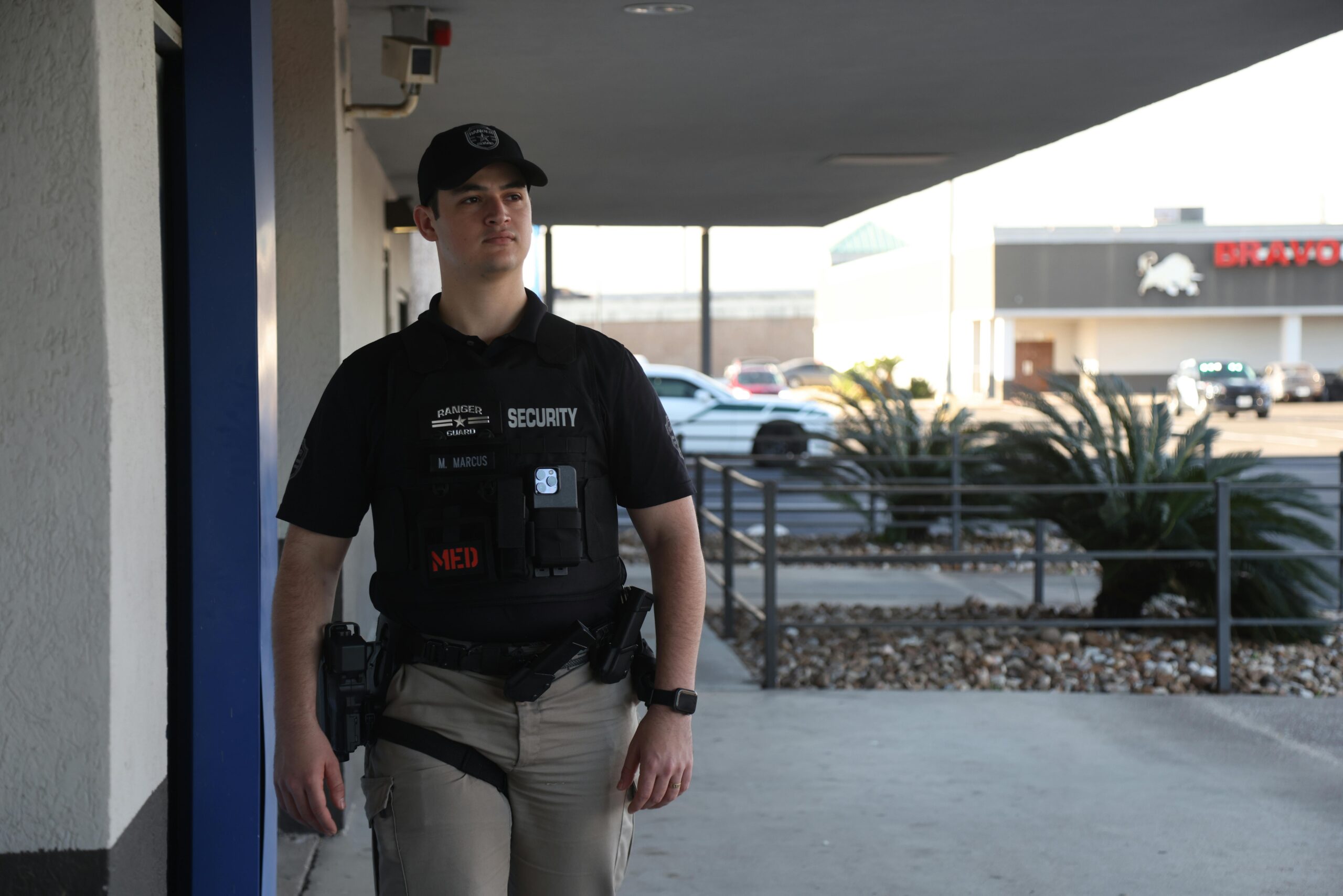
Healthcare environments are built around care, but the way they operate creates constant pressure. Patient flow changes throughout the day, emergency rooms carry emotional intensity, and access points remain open to the public. At the same time, privacy rules limit how staff can react and communicate.
This combination makes security for healthcare a daily operational requirement. It functions as a structured system that supports staff and keeps the environment controlled under pressure.
Why Healthcare Security Is Operational, Not Reactive
Healthcare facilities rarely appear high-risk at first glance. Risk develops through routine activity. Every interaction adds pressure that can shift quickly if there is no structured response.
Continuous pressure inside clinical environments
Emergency rooms and busy clinics operate under ongoing psychological strain. Patients arrive with urgent needs. Families expect answers and updates. Staff move between tasks that require immediate attention. Decisions happen quickly and often without full context.
These conditions create situations where tension builds before it becomes visible. Healthcare teams are trained to provide care. Managing confrontation or escalation is not part of their primary role.
Security supports this environment by staying connected to daily activity:
Monitoring changes in behavior within waiting areas
Supporting staff when interactions become tense
Why presence alone does not solve the problem
In some facilities, healthcare security personnel are placed at entrances or only involved during incidents. That approach leaves gaps during the early stages of escalation.
A structured system, supported by security operations management, connects security to real activity inside the building. Coverage follows movement across departments. Response protocols are defined in advance.
SHIELD’s directors of safety and security integrate this structure into daily operations so that security supports staff before situations escalate.
Patient Flow as the First Security Variable
Once security becomes part of daily operations, the source of tension is easier to recognize.
It doesn’t come from rare situations. It builds through routine.
Patients come in and take a seat. Time goes by. No one says anything, but people start noticing how long they’ve been waiting. Someone walks up to the desk to ask a question. Another person is already there doing the same. Staff are moving between tasks, trying to keep things moving without stopping to explain every delay.
Nothing is wrong on its own. Together, it starts to feel different.
Where pressure builds in movement
Every clinic has moments when the pace slows down. That’s when attention shifts.
People begin to watch what’s happening around them. They compare their wait to others. They listen more closely to conversations at the front desk. Small things start to matter more than they should.
You don’t see conflict yet, but you can feel where it’s heading.
The same areas tend to carry this pressure:
Entry and check-in during peak hours
Waiting spaces when timelines are unclear
Points where patients are redirected or delayed
It’s not the situation itself. It’s how it’s experienced.
Aligning security with real activity
At this stage, security for healthcare is not about stepping in. It’s about being present where the shift begins.
Security stays close to these areas. Not interrupting the process, but visible enough to stabilize the environment. Staff don’t have to split attention between care and tension in the room. Patients understand that the space is being managed.
A director of security keeps this consistent throughout the day, adjusting coverage based on how the clinic is actually moving.
If your clinic has moments where the atmosphere changes without a clear trigger, SHIELD can help you identify where that pressure builds and how to keep it controlled.
Balancing Patient Privacy with Physical Security
As movement inside the clinic becomes more active, another layer starts to shape how everything works.
Healthcare spaces are open, but not in the same way as other businesses. People walk in freely, yet not every part of the building is meant to be accessible. At the same time, staff cannot respond to situations the way they normally would, because information is restricted.
That creates a different kind of environment.
Open space that still needs control
A visitor can enter without barriers. From there, it’s not always clear where they should stop. Doors are not always locked. Staff move quickly between rooms. Patients follow directions that are sometimes unclear.
This creates moments where people move further than expected. Not with intent, just trying to figure out where to go.
Security has to manage that movement without turning the space into something restrictive. Patients still need to feel comfortable walking in and receiving care.
Limits on communication during incidents
When something starts to escalate, staff are not able to explain everything openly. They cannot share patient details. They cannot always clarify what is happening in real time.
From the outside, that silence can increase tension.
Security steps into that gap. Not to provide medical answers, but to control the situation while respecting privacy boundaries. This requires coordination and clear authority.
At SHIELD, healthcare security personnel are trained to operate within these limits so that privacy does not become a barrier to safety.
If your facility is trying to balance open access with restricted information, SHIELD can help structure a system that keeps both under control.
When Situations Escalate Beyond Routine
Even with structure in place, some situations go further.
Recent incidents across the U.S. show that healthcare facilities still face moments where control is lost quickly. In Pennsylvania (2025), an armed individual entered a hospital unit and opened fire after interacting with staff. In Alabama (2026), a family-related situation escalated into a fatal shooting inside a hospital. A separate case in Georgia (2026) involved a shooting at a clinic that disrupted operations within minutes.
These are not daily occurrences, but they are not theoretical either.
From tension to active security situations
Inside healthcare environments, escalation often builds quietly before it becomes visible. A situation shifts. Voices change. Movement becomes less controlled. Staff step back, not because they are unprepared, but because the situation has moved outside of clinical responsibility.
At that point, response has to be immediate.
Why training defines the response
When escalation reaches this level, outcome depends on preparation.
Security teams need to recognize behavioral changes early, understand how to move within clinical spaces, and coordinate with staff without disrupting care. This comes from structured training, not on-the-spot decisions.
Without that preparation, even a small delay in response can change the situation.
Where armed security guards become necessary
There are scenarios where communication and presence are no longer enough.
In those moments, trained and properly positioned armed security guards provide the level of control required to protect staff and patients. The role is not visible enforcement, but readiness for situations that cannot be managed through de-escalation alone.
This level of response has to remain controlled, integrated into the environment, and directed through clear leadership such as a director of security.
At SHIELD, security teams are prepared for these scenarios while remaining part of daily operations.
Conclusion
Healthcare pressure doesn’t appear suddenly. It builds through daily activity and shows up when control starts to slip.
That’s where healthcare security personnel holds the environment together. It supports staff during tense moments, keeps patient flow from turning into disruption, and ensures response is already in place when something escalates.
With structured security operations management, leadership from a director of security, and trained armed security guards, clinics stay controlled even when conditions change quickly.
If your healthcare facility needs that level of control, contact SHIELD to build a system your team can rely on every day.