
During instructional periods, accountability is clear. Students are assigned to classrooms, supervised by specific adults, and expected to remain in defined spaces. Movement is limited and predictable.
Passing periods operate differently.
Within a few minutes, large groups of students move simultaneously through shared corridors, stairwells, and locker areas. Supervision becomes distributed, visibility narrows, and interactions unfold quickly. These transitions occur multiple times each day, yet they are often managed as routine flow rather than as a structured component of school safety and security.
When evaluating operational risk, hallway transitions deserve deliberate review.
Critical incident response training exists to reduce that hesitation before it becomes a liability.
Why Lockdown Confusion Happens
Most schools have written lockdown procedures. The challenge is not documentation. It is operational consistency under pressure.
Confusion during lockdowns typically develops from unclear authority, inconsistent understanding of procedures, or fragmented communication.
When authority is unclear, staff may wait for confirmation instead of acting. When procedures are interpreted differently across grade levels or departments, the response becomes uneven. When communication pathways are not rehearsed, information flow slows at the exact moment it needs to accelerate.
These gaps rarely appear during routine days. They emerge when stress narrows attention and time compresses decision-making.
Without structured critical incident response training, schools often assume shared understanding that has never been fully tested.
Common Lockdown Failure Points and the Training Adjustments That Prevent Them
Lockdown confusion tends to repeat in predictable patterns. These breakdowns are operational, not theoretical, and they can be addressed through structured preparation.
Delayed Decision-Making
In fast-moving situations, administrators may hesitate while confirming information. Even short delays can create inconsistent responses across the building.
Training adjustment
Critical incident response training clarifies who has the authority to initiate lockdown and under what conditions. Thresholds for action are defined in advance, reducing reliance on real-time debate.
Inconsistent Classroom Procedures
Teachers may interpret lockdown instructions differently. Some may secure doors immediately. Others may wait for additional direction. Variations create uneven protection.
Training adjustment
Critical incident response team training standardizes classroom-level expectations. Door security, student positioning, communication protocols, and accountability checks are rehearsed so that responses remain consistent across departments and grade levels.
Communication Overload
During an incident, office staff may attempt to manage internal updates, parent communication, and external coordination simultaneously. Without structured roles, messaging can conflict or stall.
Training adjustment
Define communication pathways in advance. Identify who manages internal announcements, who coordinates with law enforcement, and who handles external messaging. Practice these roles during a tabletop training exercise to test timing and clarity without disrupting school operations.
Re-Entry and Recovery Confusion
Even when lockdown initiation is effective, confusion often returns during the release and recovery phases. Staff may not know when it is safe to resume movement or how to account for students after the incident.
Training adjustment
Critical incident response training must include termination procedures and post-incident accountability steps. Recovery should be structured with the same clarity as initiation. Clear release authority prevents staggered or premature reopening.
The Role of Tabletop Training in Clarifying Roles
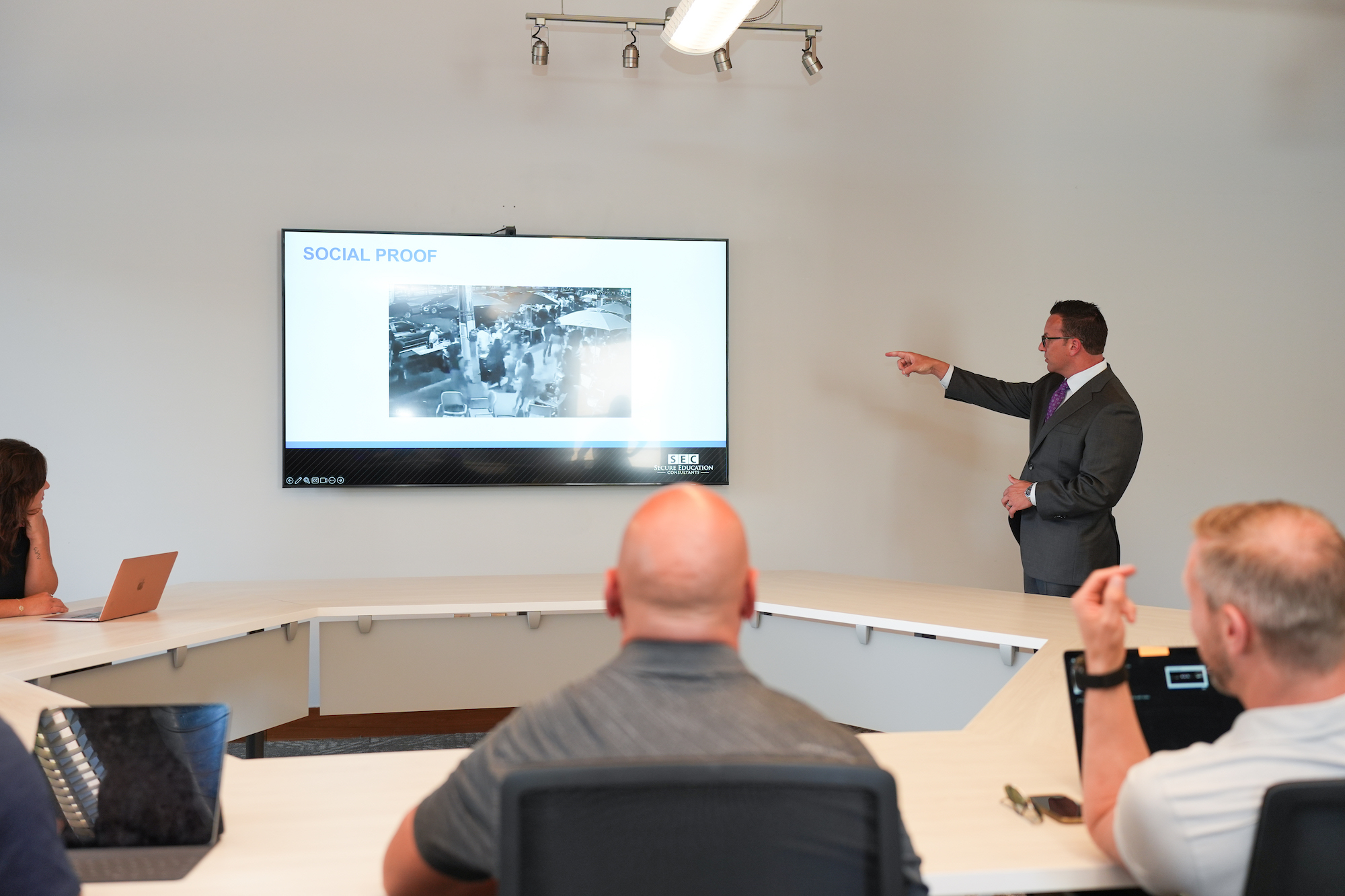
A tabletop training exercise allows administrators, teachers, security personnel, and office staff to walk through realistic scenarios step by step. Participants discuss decision points, communication timing, and role boundaries in a controlled setting. These exercises reveal misunderstandings that are rarely visible in policy documents.
Tabletop sessions also expose friction between departments. A decision that seems clear to the administration may not align with classroom-level realities. Identifying these gaps during discussion prevents confusion during actual incidents.
Critical incident response team training that includes tabletop exercises transforms procedures from static documents into shared operational practice.
The Role of a Director of Safety in Lockdown Preparedness
Training only improves outcomes if someone ensures it remains current and aligned with evolving risks.
The role of a director of safety in lockdown preparedness is to evaluate procedures regularly, coordinate critical incident response training across roles, and integrate findings into the broader school safety framework. This includes reviewing authority structures, ensuring communication systems are tested, and confirming that classroom-level expectations remain consistent over time.
SHIELD’s directors of safety and security provide structured school safety services that focus on operational readiness rather than documentation alone. They conduct critical incident response team training, facilitate tabletop training exercises, and assess whether procedures function under simulated pressure. By assigning ownership at the leadership level, lockdown preparation becomes a managed system rather than a periodic compliance task.
Conclusion
Lockdown confusion develops when written procedures are not reinforced through structured practice. Authority may be defined on paper, but unless it is rehearsed, interpretation gaps remain.
Critical incident response training clarifies decision thresholds, standardizes classroom procedures, and aligns communication roles before an incident occurs. When paired with regular tabletop training exercises, schools are able to test assumptions, identify weaknesses, and correct misalignment in a controlled setting.
This is why SHIELD recommends that schools organize regular critical incident response training, along with scheduled tabletop trainings, as part of ongoing school safety services. Consistent review and rehearsal ensure that authority is clear, roles are aligned, and no critical step is overlooked when it matters most.
If your school needs a stronger safety structure or experienced personnel, contact SHIELD for comprehensive school safety services.